

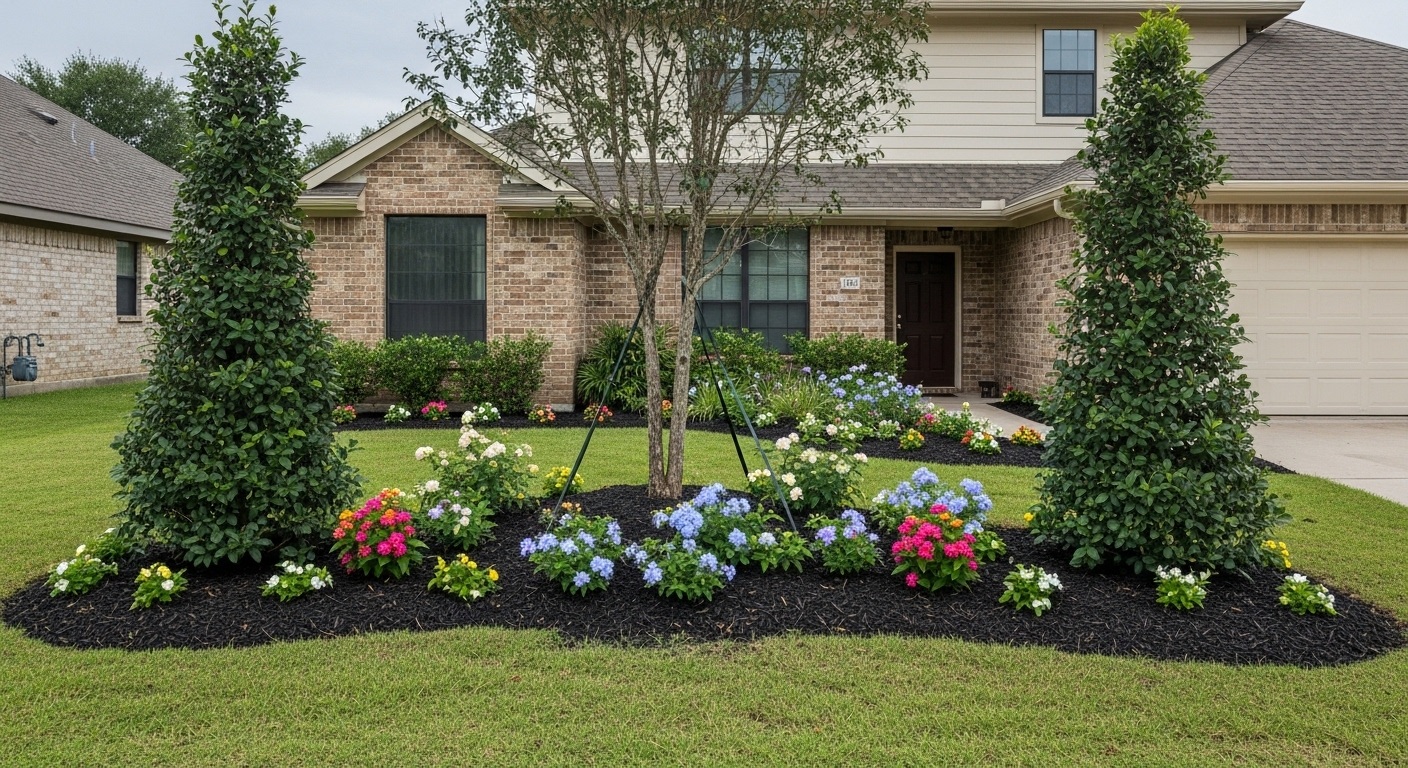
Before and after photos of flower bed transformations are satisfying for a reason — they show what's actually possible when a neglected, overgrown, or poorly designed bed gets a proper overhaul. But for Houston homeowners, the before-and-after story isn't just about aesthetics. It's about solving the real problems that make flower beds frustrating: the wrong plants for the climate, poor drainage, no structure, and no plan.
When those problems get fixed, the transformation is dramatic. And in Houston's climate, where the right plants genuinely thrive and the long growing season means beds are visible and active for most of the year, the payoff from a good transformation is bigger than almost anywhere else.
A flower bed makeover in Houston isn't the same as one in Phoenix or Atlanta or Chicago. Our climate has specific demands. The plants that create stunning results here — lantana, salvia greggii, plumbago, knockout roses, pentas, society garlic — are different from what works elsewhere. And the problems we're solving are Houston-specific: clay soil that doesn't drain, summer heat that pushes past 100°F, humidity that encourages fungal disease, and St. Augustine grass that creeps aggressively into bed edges.
The most successful Houston flower bed transformations address all of these realities, not just the visual ones. A beautiful bed that's planted in unamended clay soil, without mulch, with the wrong plants for the sun exposure, will look good for a few weeks in spring and then deteriorate. A transformation done right creates something that looks great and lasts.
Most Houston flower beds that need transformation share a handful of recognizable issues. Overgrown or mismatched plants that have outgrown their space and lost their shape. Weeds that have moved in because the bed has bare soil and no mulch. Struggling annuals that get replanted every year but never really thrive because the soil hasn't been improved. Edges that have dissolved into the lawn, making the bed look shapeless and unkempt. Old, compacted mulch that's lost its color and provides no benefit.
Another very common issue in Houston is poor plant selection for sun exposure. A bed on the north side of a house that's planted with lantana and salvia will struggle because those plants need full sun. A south-facing bed with impatiens will fry. Matching plant selection to actual site conditions is foundational to any successful transformation.
A properly transformed Houston flower bed starts with the soil. Existing plants that aren't working get removed. The soil gets loosened and amended with compost — especially important in Houston's clay-heavy areas. The bed edge gets re-cut and defined with permanent edging. Then planting begins with intention: structural evergreens in the back, mid-height bloomers in the middle, low edging plants in front.
For a sunny front bed, that might look like dwarf yaupon holly or loropetalum as the back layer, knockout roses or salvia as the mid-layer, and society garlic or liriope along the front edge. Fresh dark brown hardwood mulch goes in last, pulling the whole design together and immediately making the bed look finished and professional.
The results are typically visible the same day. A re-edged bed with fresh mulch and healthy plants looks dramatically different from the before — even if the same footprint is being used. The difference is in the structure, the plant selection, and the attention to detail.
Flower bed transformations happen across every Houston neighborhood, and the styles vary with the architecture and lifestyle of each area. In Memorial and River Oaks, formal foundation beds with clipped evergreen shrubs and refined color palettes complement large traditional brick homes. In The Woodlands and Cypress, more naturalistic designs with Texas natives and ornamental grasses fit the suburban landscape character. In Pearland and League City, newer construction homes benefit from thoughtful foundation plantings that make new builds look established and well-landscaped. In Katy and Sugar Land, HOA communities appreciate clean, consistent bed designs that elevate the whole streetscape.
Every transformation shares the same core principles: right plants for the conditions, proper soil preparation, clean structure, and consistent mulch. The style adapts to the neighborhood; the fundamentals don't change.
The most important first step is an honest assessment. Walk your beds and take photos from the street — the angle everyone else sees. Where are the problem areas? Which plants are actually performing and which are just taking up space? Is the bed edge defined or has it dissolved? Is there fresh mulch or compacted old material?
From there, prioritize the most visible bed — usually the one nearest the front door or along the main walkway. That's where transformation will have the most immediate impact on curb appeal. Start there, do it right, and use it as the template for the rest of the yard.
We've transformed flower beds all across the Houston metro area — from small entry beds to full front yard overhauls. We assess your existing beds, recommend plant changes suited to your specific sun, soil, and drainage conditions, and handle the entire installation from start to finish.
Contact us today for a free consultation. We serve Houston, Katy, Sugar Land, Pearland, The Woodlands, Cypress, Spring, Friendswood, League City, and surrounding communities throughout Southeast Texas.