

If you've gardened in Houston for more than one summer, you know the brutal reality: bare soil dries out fast, weeds come back aggressively, and plant roots bake in the heat. The right mulch is the single most effective thing you can put in a flower bed to fight all three of those problems at once. And in Southeast Texas, where the climate is both extreme and unpredictable, choosing the wrong mulch can actually make things worse.
This guide breaks down exactly what works best for Houston flower beds — what to use, what to avoid, how to apply it, and when to refresh it throughout the year.
Houston averages over 50 inches of rain per year, but that rain doesn't fall evenly. It comes in bursts — sometimes several inches in a single afternoon storm — followed by stretches of intense heat and dry weather. That cycle is punishing for flower beds without proper protection.
Good mulch handles multiple jobs in Houston's climate simultaneously. It slows evaporation during dry spells, protecting roots when temperatures soar above 95°F. It cushions the soil during heavy downpours, reducing erosion and preventing soil splashing onto your home's foundation and siding. It suppresses weeds that grow aggressively in warm, humid conditions. And over time, organic mulch breaks down and improves Houston's notoriously clay-heavy soil, making it looser, better-draining, and more hospitable for roots.
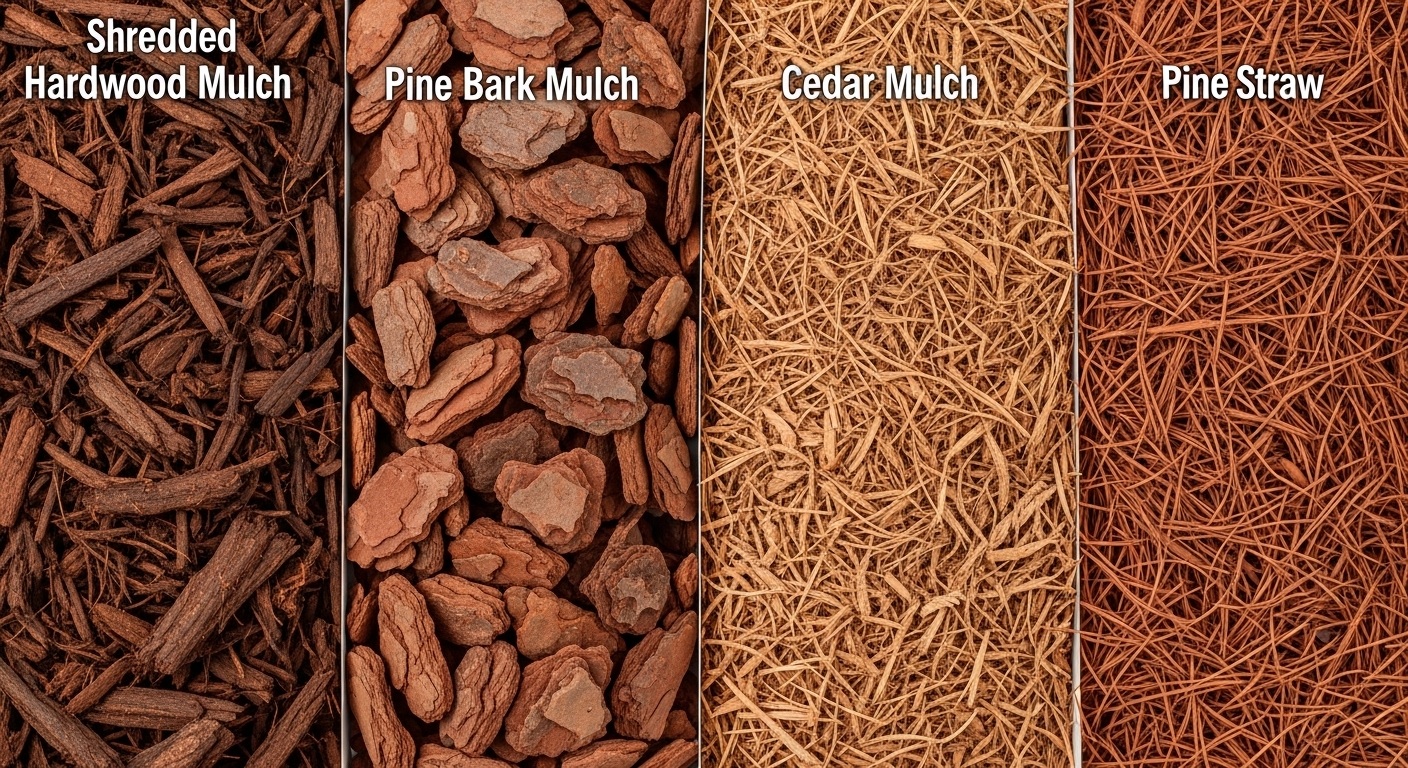
Shredded Hardwood Mulch is the top all-around choice for Houston flower beds. It stays in place during rain, breaks down at a moderate pace, and improves soil structure as it decomposes. It looks natural and tidy, and dark brown hardwood mulch creates beautiful contrast against green plants and brick homes. This is the most widely used and recommended mulch in the Houston area for good reason.
Pine Bark Mulch is an excellent alternative, especially in ornamental beds and around foundation plantings. It's lightweight, allows water to percolate through effectively, and looks clean and polished. Pine bark is slightly more acidic than hardwood, which can benefit certain plants but is generally fine for the wide variety of Houston-friendly perennials and shrubs.
Cedar Mulch lasts longer than either hardwood or pine bark because it decomposes more slowly. It has a pleasant natural scent and handles Houston summers well. The tradeoff is that it's typically more expensive and doesn't enrich the soil as quickly. Good for high-visibility beds where you want a consistent look and don't mind spending a bit more.
Pine Straw is popular in parts of the Gulf Coast South and works reasonably well in Houston. It's lightweight, knits together to resist washing away, and gives beds a naturalistic look. It's a good choice around camellias, azaleas, and other acid-loving plants.
Rock and gravel are trendy but can be problematic in Houston flower beds that include traditional perennials and shrubs. Stone absorbs and radiates heat, raising soil temperatures in ways that stress plant roots during summer. It also doesn't improve the soil, and once you use rock, it's very difficult to change your mind. Reserve stone and gravel for xeriscape-style beds with agave, ornamental grasses, and other heat-lovers that can genuinely handle those conditions.
Dyed or colored mulch (especially red) looks artificial and fades quickly in Houston's intense sun. It also sometimes contains recycled materials that can introduce problems. Natural, undyed mulch almost always looks better and performs better.
Rubber mulch doesn't decompose, doesn't improve the soil, gets extremely hot in summer, and can smell unpleasant in Houston's heat. Skip it entirely for flower beds.
Depth matters. Aim for 2–3 inches of mulch across the bed. Less than 2 inches doesn't provide adequate weed suppression or moisture retention. More than 3–4 inches can limit airflow and water penetration to the roots.
Keep mulch pulled back 2–3 inches from plant stems, shrub trunks, and your home's foundation. Piling mulch against stems traps moisture and creates conditions for rot and fungal issues. This is especially important during Houston's humid summers when air circulation matters.
Before adding fresh mulch, check what's already there. If you have several years of accumulated mulch that's compacted into a dense mat, loosen or remove some of it before topping off. Simply adding more every year can build up a barrier that actually prevents water from reaching the soil.
Spring (March–April) is the primary mulching season in Houston — right before the heat arrives. Getting fresh mulch down before May gives your beds the best protection for the long summer ahead. Fall (October–November) is a great secondary time to refresh mulch, protecting roots through the mild Houston winter and getting the beds looking clean for the holiday season.
After major storms, walk your beds and check for areas where mulch has washed or blown away. Redistribute or top off as needed, especially in beds along walkways and driveways where runoff tends to carry mulch.
For most Houston homes — especially brick homes with warm tones — dark brown hardwood mulch creates the richest, most polished look. It makes plant colors pop and gives the bed a finished, professional appearance. Natural pine bark offers a slightly lighter alternative that works well with stone or stucco exteriors.
Whatever you choose, use the same mulch throughout all of your beds. Consistency across your landscape creates cohesion that makes the whole yard look better designed.
At HoustonFlowerBeds, we handle everything from bed preparation and soil improvement to mulch installation and full planting. We work with Houston homeowners throughout the metro area — Katy, Sugar Land, Pearland, The Woodlands, Cypress, Spring, Friendswood, League City, and beyond — to create flower beds that look great and thrive in Southeast Texas conditions.
Contact us today for a free consultation.