

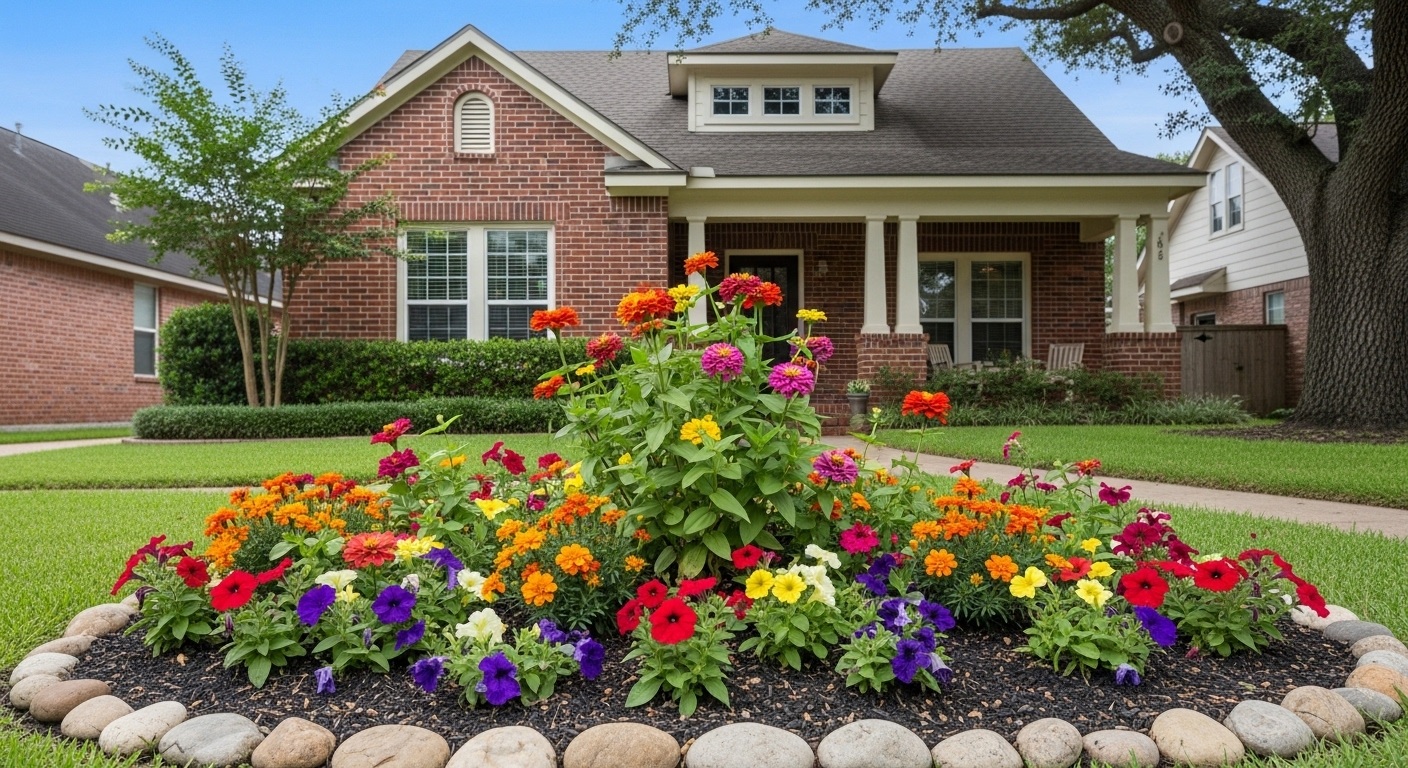
Brick homes are everywhere in Houston — from classic ranch-styles in Meyerland to newer builds in Katy and Pearland. They're durable, they look great, and they give your landscaping a strong foundation to work with. But a beautiful brick exterior can actually be harder to landscape than it looks. The texture, the color, and the weight of the material means flower beds need to be planned carefully to complement the home rather than compete with it.
The good news is that when you get it right, flower beds around a Houston brick house can look stunning. The combination of warm brick tones with the right plant colors, clean edging, and smart layout creates the kind of curb appeal that makes people slow down as they drive by.
Before you plant a single flower, look at the color of your brick. Houston brick homes typically fall into a few categories: warm red or rust brick (the most common), tan or buff brick, dark brown or charcoal brick, and lighter cream or off-white brick. Each pairs with different plant colors, and getting this right is the difference between a flower bed that looks intentional and one that looks random.
Warm red or rust brick pairs beautifully with deep purples (salvia, agapanthus), creamy whites (knockout roses, society garlic), and soft pinks (pentas, drift roses). Avoid orange or red flowers that blend into the brick and disappear visually.
Tan or buff brick is extremely versatile and works with almost any color palette. Blues and purples look especially sophisticated. Bold yellows and oranges pop without clashing.
Dark brown or charcoal brick benefits from lighter, brighter plants — white flowers, silver foliage, and lime green groundcovers create beautiful contrast.
Light cream or off-white brick looks elegant with soft pastels or rich, saturated colors like deep burgundy, cobalt blue, or violet.
Foundation beds — the beds that run along the front face of the house — are the most visible planting in your yard. In Houston's climate, these need to be plants that look great year-round, not just for a few weeks in spring. That means leaning on reliable, heat-tolerant performers.
For structure and year-round greenery, excellent choices include dwarf yaupon holly (a Texas native that tolerates just about anything), Indian hawthorn (evergreen, white spring flowers, compact), loropetalum (stunning burgundy foliage, very popular in Houston), and compact nandina (colorful foliage, seasons of interest). These provide the backbone of the bed.
For color layered in front of or between the structural plants, use pentas, lantana, salvia greggii, drift roses, angelonia, or vinca. All of these thrive in Houston summers and keep blooming even during the brutal August heat that kills less-adapted plants.
Foundation beds along Houston brick homes are often too shallow — a narrow 18-inch strip that leaves no room for layering or visual impact. Ideally, a foundation bed should be at least 3–4 feet deep, and 5–6 feet if you want real drama. That depth allows you to create proper layers: tall structural plants near the house, mid-height flowering plants in the middle, and low edging plants at the front.
Curved front edges soften the straight lines of a brick exterior and give the yard a more natural, welcoming look. A smooth, flowing curve along the bed edge — defined with steel edging, brick, or natural limestone — does more for curb appeal than almost any other single change you can make.
Avoid making beds perfectly symmetrical unless you're going for a formal, classic look. A slightly asymmetrical design with varied plant groupings feels more organic and interesting.
Planting around the foundation of a Houston brick home comes with specific challenges. Afternoon sun on south and west-facing walls can be intense enough to stress even heat-tolerant plants. In those spots, lean heavily on lantana, salvia, and society garlic, which genuinely thrive in those conditions. Avoid impatiens, begonias, and other shade-preferring annuals on sun-baked walls.
North-facing foundation beds stay shaded and cooler, which opens up a different plant palette. Caladiums, cast iron plant, ferns, and shade-loving hostas all perform well here and add lush texture that looks tropical and intentional.
Drainage near the foundation is critical in Houston's rainy season. Build your beds slightly mounded away from the house, and never let mulch or soil pile up against the brick. This protects both the foundation and the plants.
Dark brown hardwood mulch is the classic choice for red and tan brick — it creates rich contrast and makes plant colors pop. Pine bark gives a slightly lighter, more natural look. Both are solid organic options that improve soil health over time, which is especially important in Houston's clay-heavy soil.
Apply 2–3 inches and refresh annually. Keep it pulled back a few inches from the brick to avoid moisture buildup and potential pest issues.
We've designed and installed flower beds around hundreds of brick homes across the Houston area, and we know exactly how to make them look their best. From color selection that complements your specific brick to plant choices that thrive in your exact sun and soil conditions, we handle every detail.
Contact us for a free consultation. We serve Houston, Katy, Sugar Land, Pearland, The Woodlands, Cypress, Friendswood, Spring, League City, and all surrounding Houston communities.